
When Legal Frameworks Fail: Protecting Peoples and Sacred Sites in the 21st Century

Attention Activity: Law on Paper vs. Reality

Quick Experiment (1 Minute)
Imagine you are advising a community whose sacred sites are under threat. You can choose only one immediate action:
- File an emergency case at an international court
- Launch a media campaign and mobilize civil society
Pause and decide which you would pick—and why. Keep your choice in mind as we move through the lesson; we will return to it at the end.
📚 What's in This Lesson
- Understand the evolution and limitations of international legal frameworks designed to prevent genocide and protect religious minorities
- Analyze real-world case studies where legal frameworks failed to prevent atrocities
- Evaluate the gap between legal obligations and enforcement mechanisms
- Propose actionable improvements to strengthen protections for vulnerable populations
💡 Why This Matters
- Understanding these failures helps prevent future atrocities
- Legal and humanitarian professionals need to recognize when systems are inadequate
- Active citizenship requires knowledge of how international law actually functions
- Religious communities worldwide face ongoing threats despite existing protections
Estimated Time: 15-20 minutes
The Promise: Rules-Based International Order
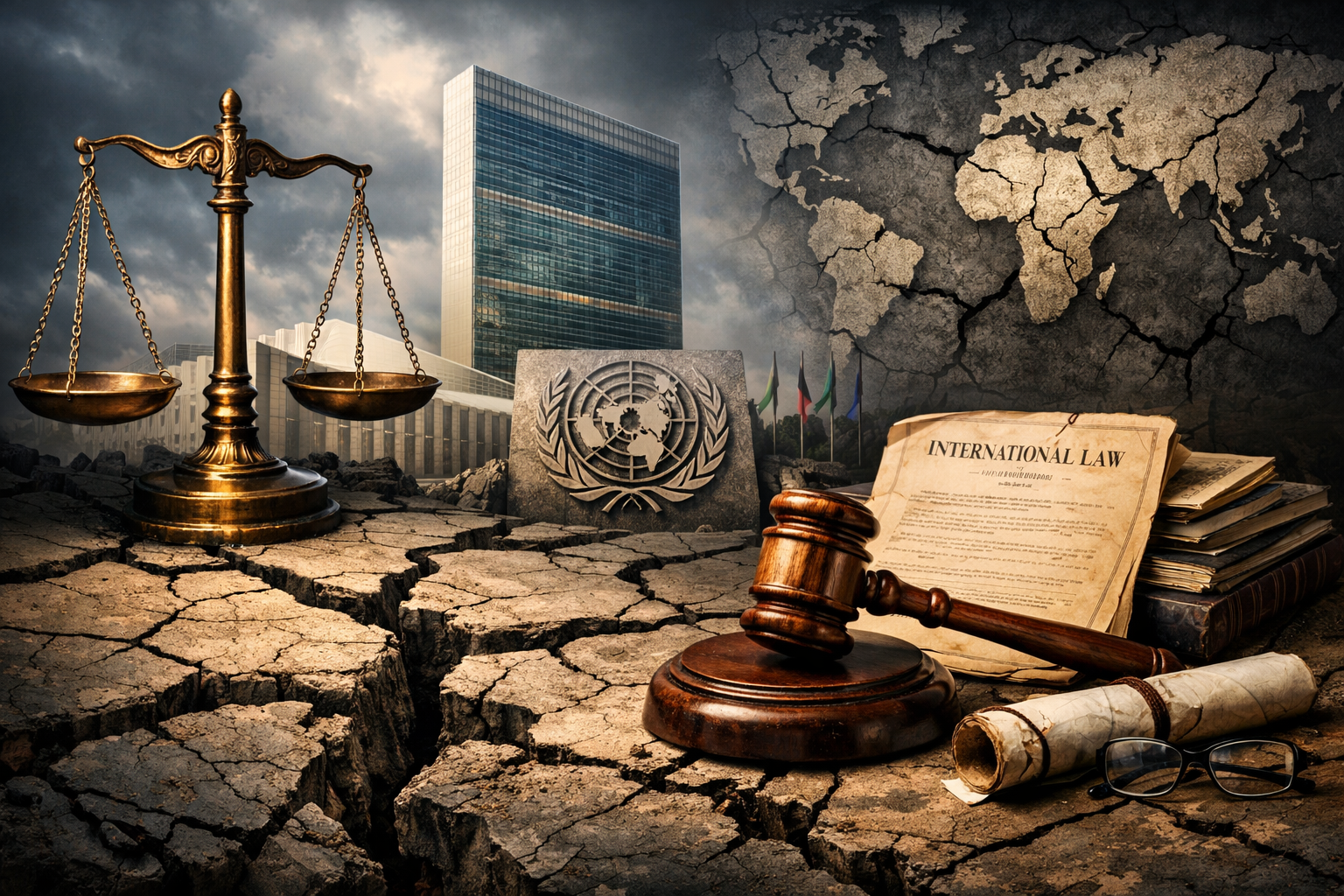
International law has evolved over centuries from respecting absolute sovereign power to establishing restraints on what governments can do to their own people and others.
Landmark Developments
First use of "Crimes Against Humanity and Civilization" in response to Armenian genocide
UN Genocide Convention adopted, defining genocide and obligating states to prevent and punish it
Hague Convention for Protection of Cultural Property in Armed Conflict
International Convention on Elimination of All Forms of Racial Discrimination (CERD)
These frameworks created legal obligations and established that certain acts—genocide, ethnic cleansing, cultural erasure—are universally prohibited.
Knowledge Check 1
What represents the most significant shift in international law over the past century?
Feedback will appear here
The Reality: When Treaties Are Not Enough
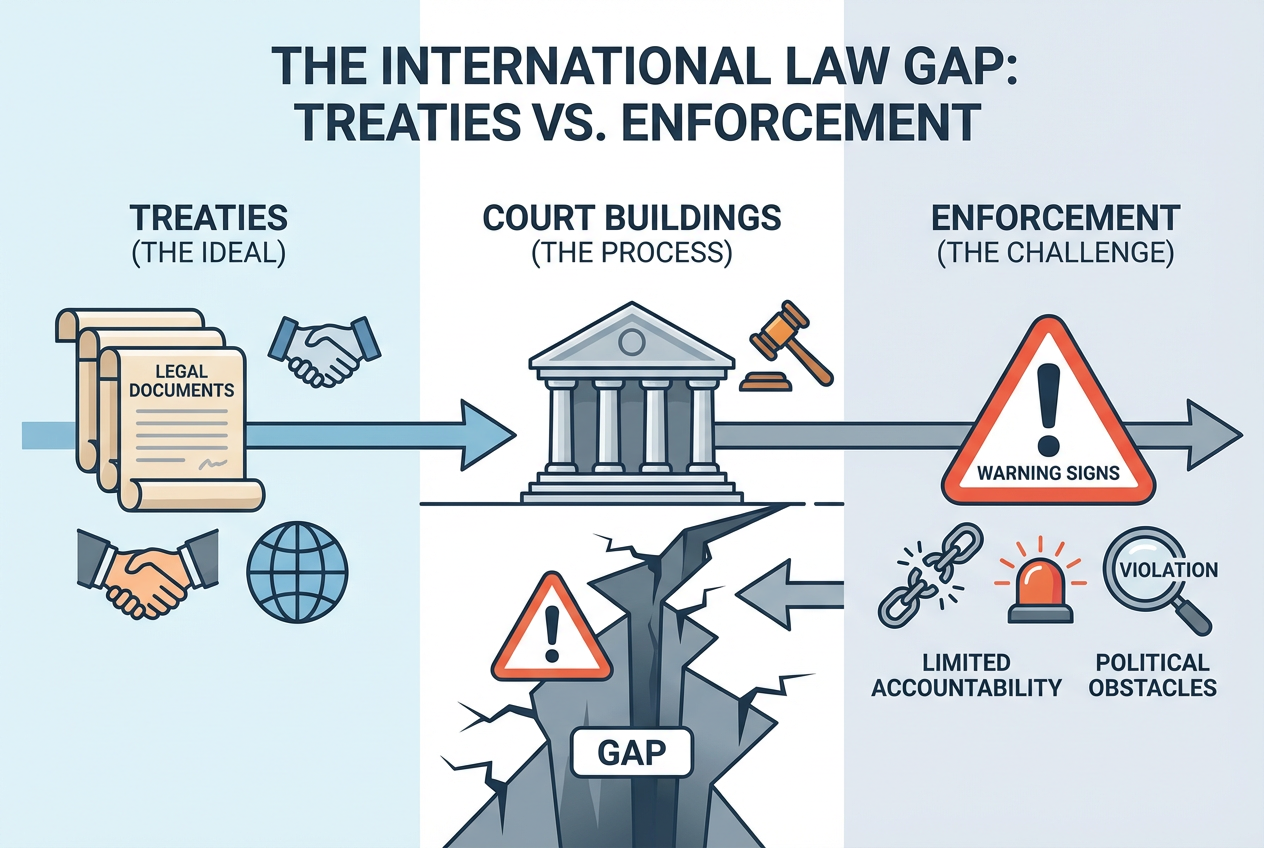
Despite comprehensive legal frameworks, atrocities continue. The gap between written law and actual protection has widened in recent decades.
Why Legal Frameworks Fail
The Problem: International courts have no police force to enforce arrest warrants or court orders.
The International Criminal Court (ICC) and International Court of Justice (ICJ) depend entirely on voluntary state cooperation. When states refuse, there's no mechanism for enforcement.
The Problem: Powerful states selectively apply international law based on strategic interests.
Geopolitical considerations often trump legal obligations. Nations condemn violations by adversaries while ignoring or enabling violations by allies.
The Problem: Perpetrators use sophisticated legal arguments and denial tactics to circumvent obligations.
States claim self-defense, anti-terrorism operations, or internal security matters while systematically targeting ethnic or religious groups.
The Problem: Legal proceedings take years while atrocities unfold in weeks or months.
By the time courts issue orders or judgments, populations have been displaced, cultural sites destroyed, and facts on the ground irreversibly changed.
Case Study: Artsakh/Nagorno-Karabakh
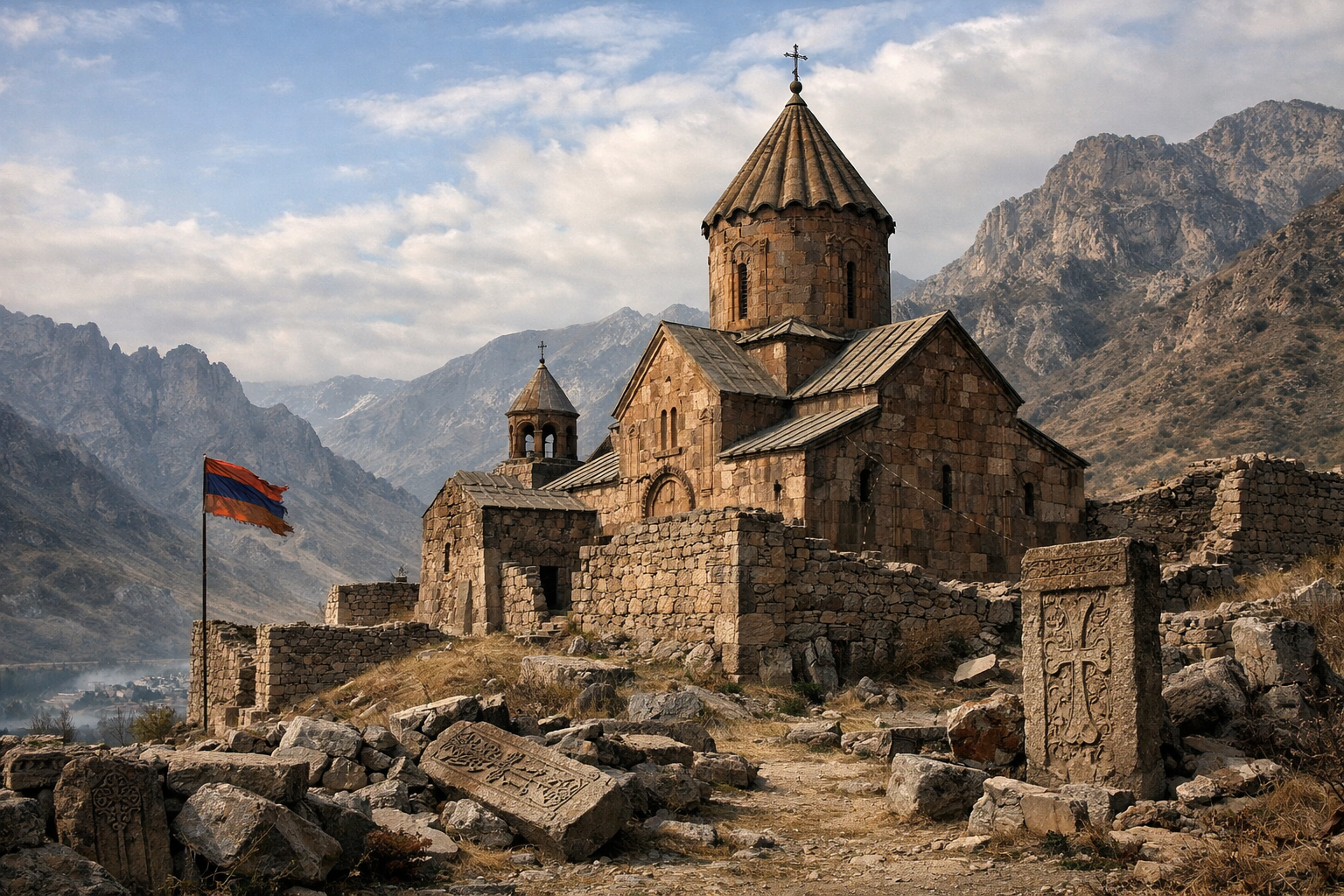
To understand how legal frameworks fail in practice, we examine the Armenian population of Nagorno-Karabakh (Artsakh)—a case where comprehensive international law existed but failed to prevent ethnic cleansing.
Historical Context
The Armenian presence in this region is indigenous, predating all other populations. Key historical points:
- 1914: ~5,000 Armenian churches, seminaries, and schools; 2.1 million Armenians in the region
- 1915-1923: Armenian Genocide under Ottoman Turkey
- By 2000: Fewer than 50 Armenian institutions remained; population under 100,000
- 1920s: Soviet policies created ethnic conflict; Armenian territory placed under Azerbaijani control
- 1988-1991: Pogroms against Armenians in Sumgait and Baku
- 1992: OSCE Minsk Group formed to peacefully resolve dispute
Knowledge Check 2
According to the content, what is a primary reason international legal frameworks fail to prevent atrocities?
Feedback will appear here
The 2020-2023 Crisis: Law Meets Reality
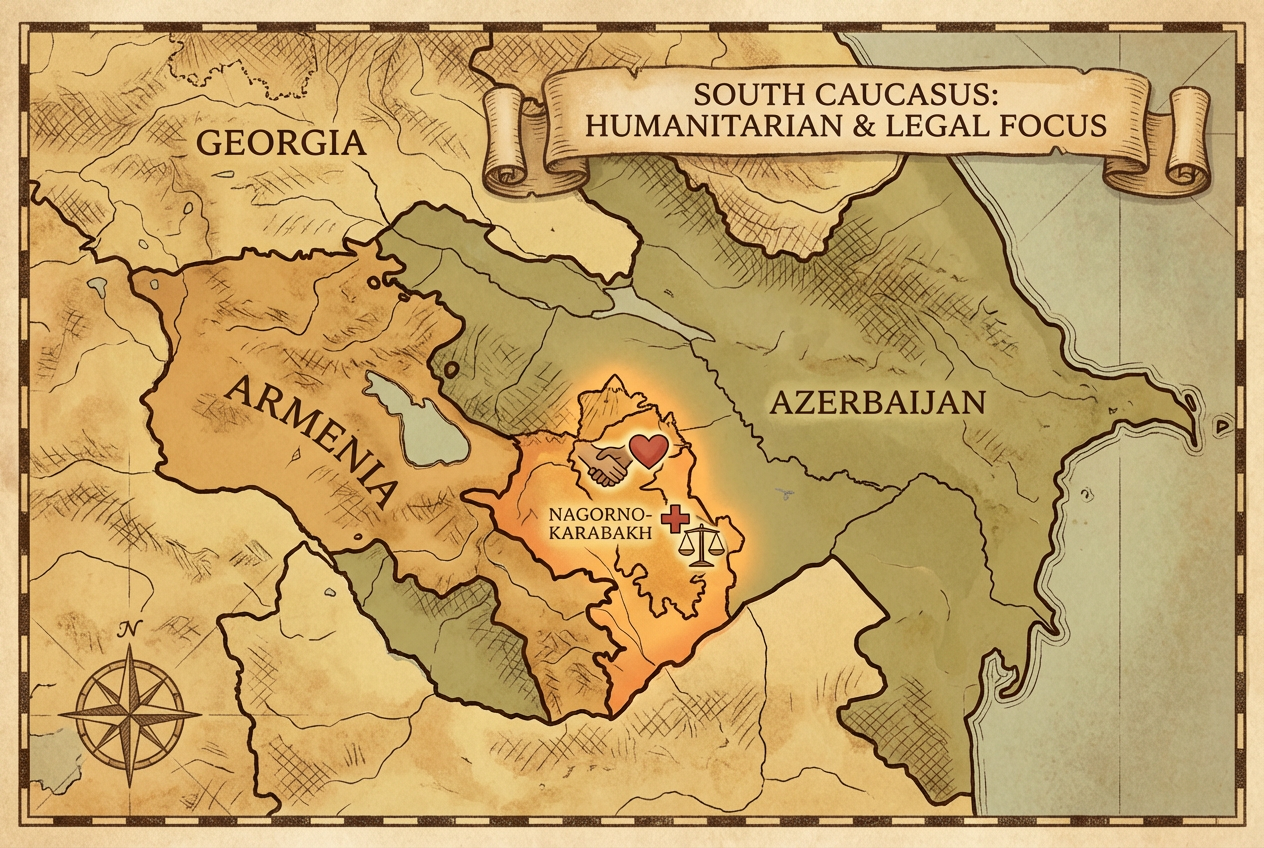
Timeline of Events
Azerbaijan invades Nagorno-Karabakh with Turkish military support, violating the OSCE peace process. Ends with armistice agreement.
Armenia files case at International Court of Justice citing ethnic cleansing under CERD (Convention on Elimination of Racial Discrimination).
ICJ orders Azerbaijan to prevent acts of vandalism and desecration of Armenian cultural heritage, churches, and monuments.
Azerbaijan imposes blockade of Nagorno-Karabakh, creating humanitarian crisis. Despite ICJ orders, international peacekeepers present, and expert warnings of impending genocide.
Military offensive launched. Within days, 120,000 indigenous Armenians (including 30,000 children) forcibly displaced. Ethnic cleansing completed.
ICJ issues detailed order requiring Azerbaijan to allow safe return of displaced persons and protect those remaining. Azerbaijan ignores order completely.
Azerbaijan's Legal Obligations
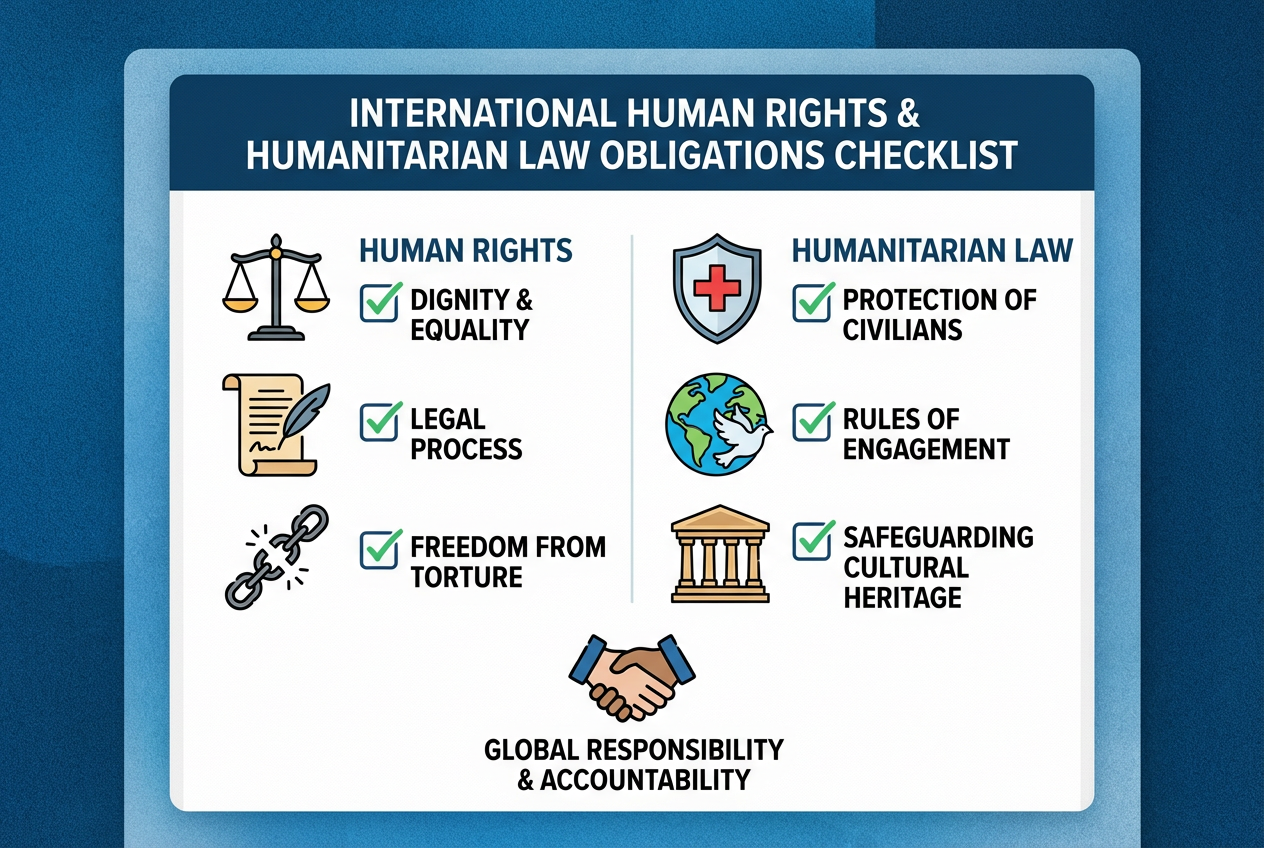
Azerbaijan is a state party to comprehensive international human rights instruments:
- International Covenant on Civil and Political Rights (ICCPR)
- International Covenant on Economic, Social and Cultural Rights (ICESCR)
- Convention on Elimination of All Forms of Racial Discrimination (CERD)
- Convention Against Torture (CAT)
- Convention on Rights of the Child (CRC)
- European Convention on Human Rights (ECHR)
1954 Hague Convention for Protection of Cultural Property in Armed Conflict
Requires parties to:
- Safeguard cultural property, including religious sites
- Respect cultural property in occupied territory
- Take precautions to avoid damage
- Distinguish between military and cultural targets
November 17, 2023 Order (voted 13-2):
- Ensure displaced persons can return safely
- Ensure remaining persons can depart safely if they wish
- Ensure those staying are free from force or intimidation
- Protect registration, identity, and property documents
- Submit compliance report within 8 weeks
Knowledge Check 3

What happened after the International Court of Justice issued legally binding orders to Azerbaijan in November 2023?
Feedback will appear here
International Law on Religious Sites
International humanitarian law provides specific protections for religious sites during armed conflict through three core principles:
1. Distinction Principle
Prohibits attacking civilian objects, including places of worship. When doubt exists about whether a site is being used for military purposes, it must be presumed not to be.
2. Proportionality Principle
Prohibits attacks expected to cause civilian or cultural damage excessive in relation to concrete military advantage. Religious sites receive heightened protection.
3. Precautionary Principle
Armed forces must take "all feasible precautions" to verify targets are not cultural property, minimize damage, and cancel attacks if targets are identified as religious or cultural sites.
Current Situation
Multiple monitoring organizations have documented systematic destruction of Armenian heritage in Nagorno-Karabakh:
- Caucasus Heritage Watch – Satellite imagery and technical reporting
- Monument Watch – Mapping and monitoring of cultural sites
- Save Armenian Monuments – Video and photographic evidence
- Freedom House (2024) – Comprehensive fact-finding report concluding intentional cultural erasure
Legal Manipulation in Practice
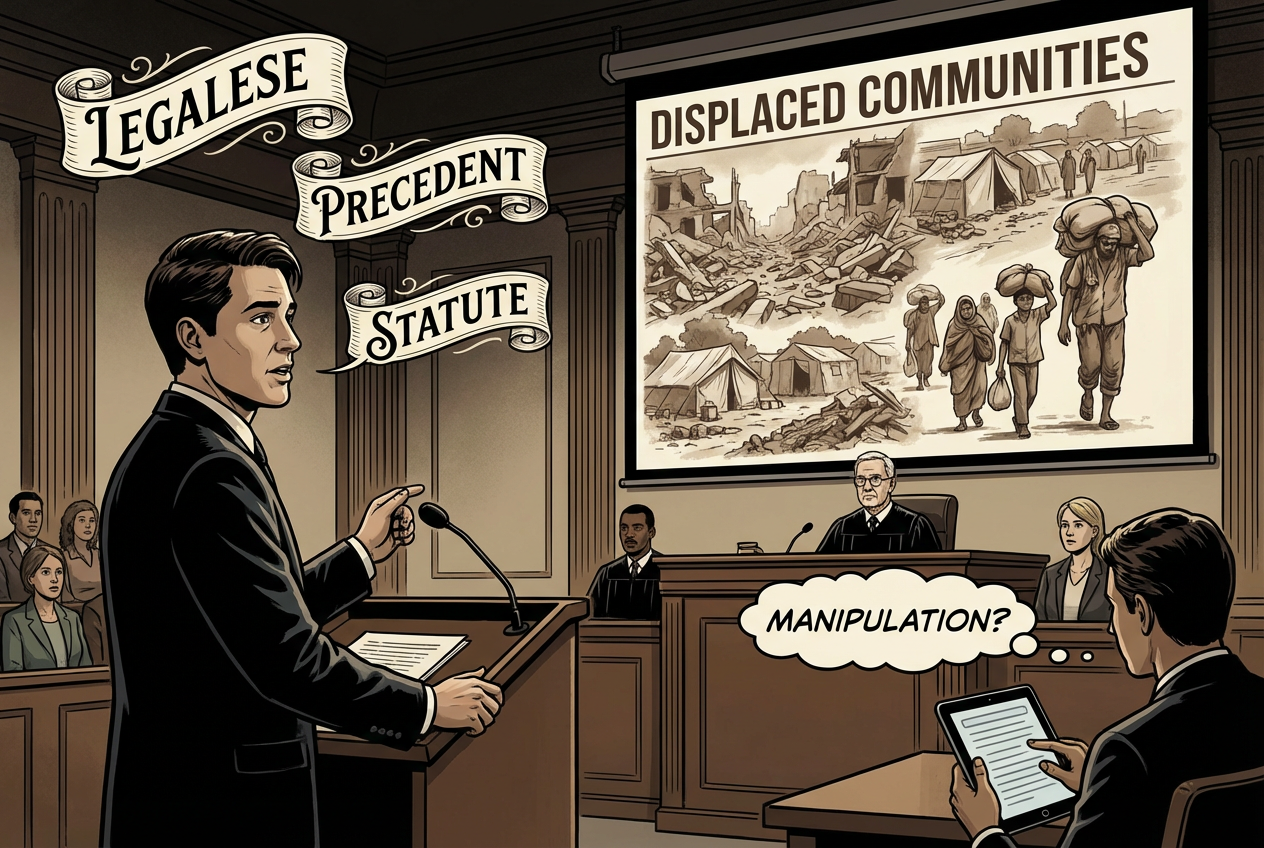
Azerbaijan's approach demonstrates how states manipulate legal processes while violating their obligations:
Formal Undertakings to the Court
At the October 12, 2023 ICJ hearing, Azerbaijan's legal team made three key claims:
The Reality
- Azerbaijan's president publicly boasted about driving Armenians out "like dogs"
- Government officials received medals for atrocities against Armenians
- Systematic destruction of churches and cultural sites continued after court orders
- Zero Armenians allowed to safely return despite court orders
- Sham trials of Armenian political prisoners on fabricated genocide charges
- Demands that all legal proceedings be dropped as condition for ending aggression
Knowledge Check 4
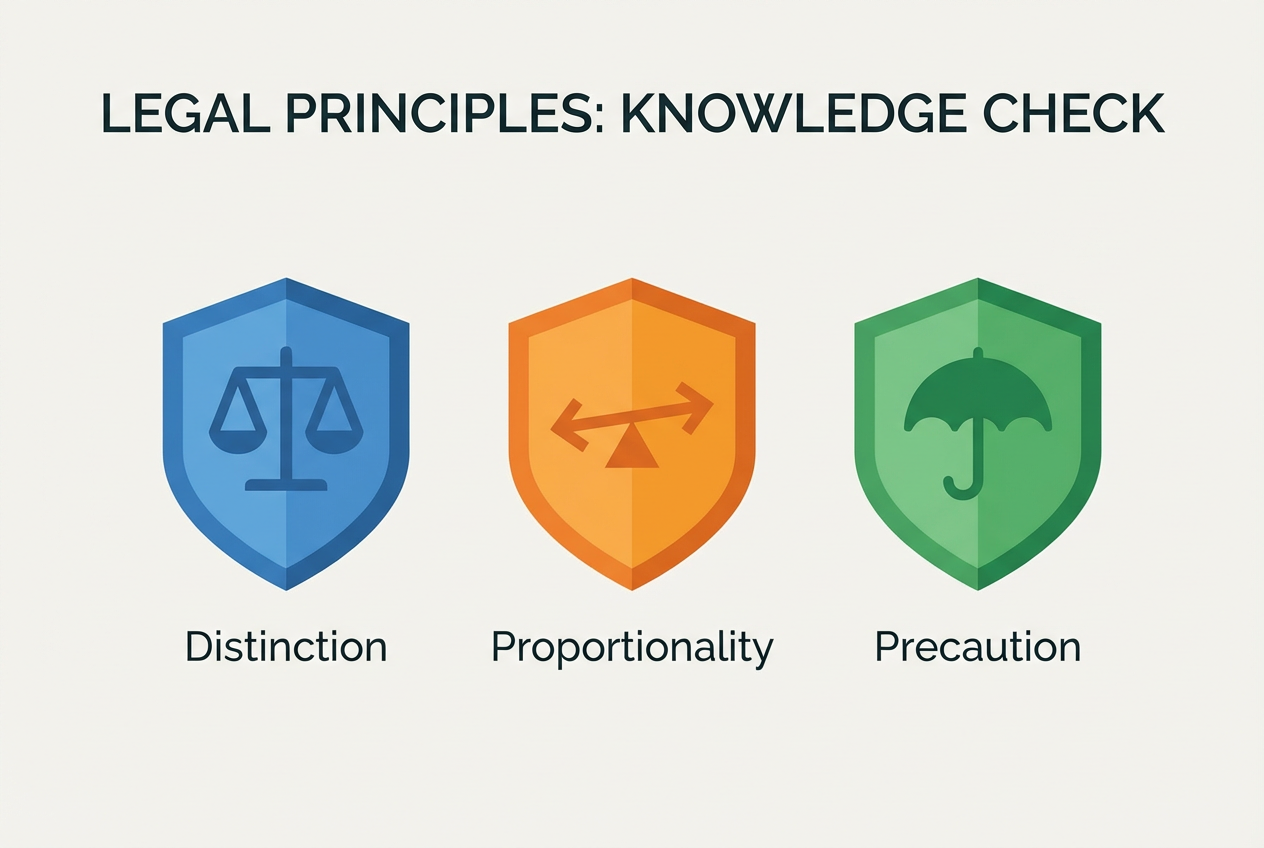
The three core principles protecting religious sites under international humanitarian law are:
Feedback will appear here
Doing Better to Do Good: Proposals for Change
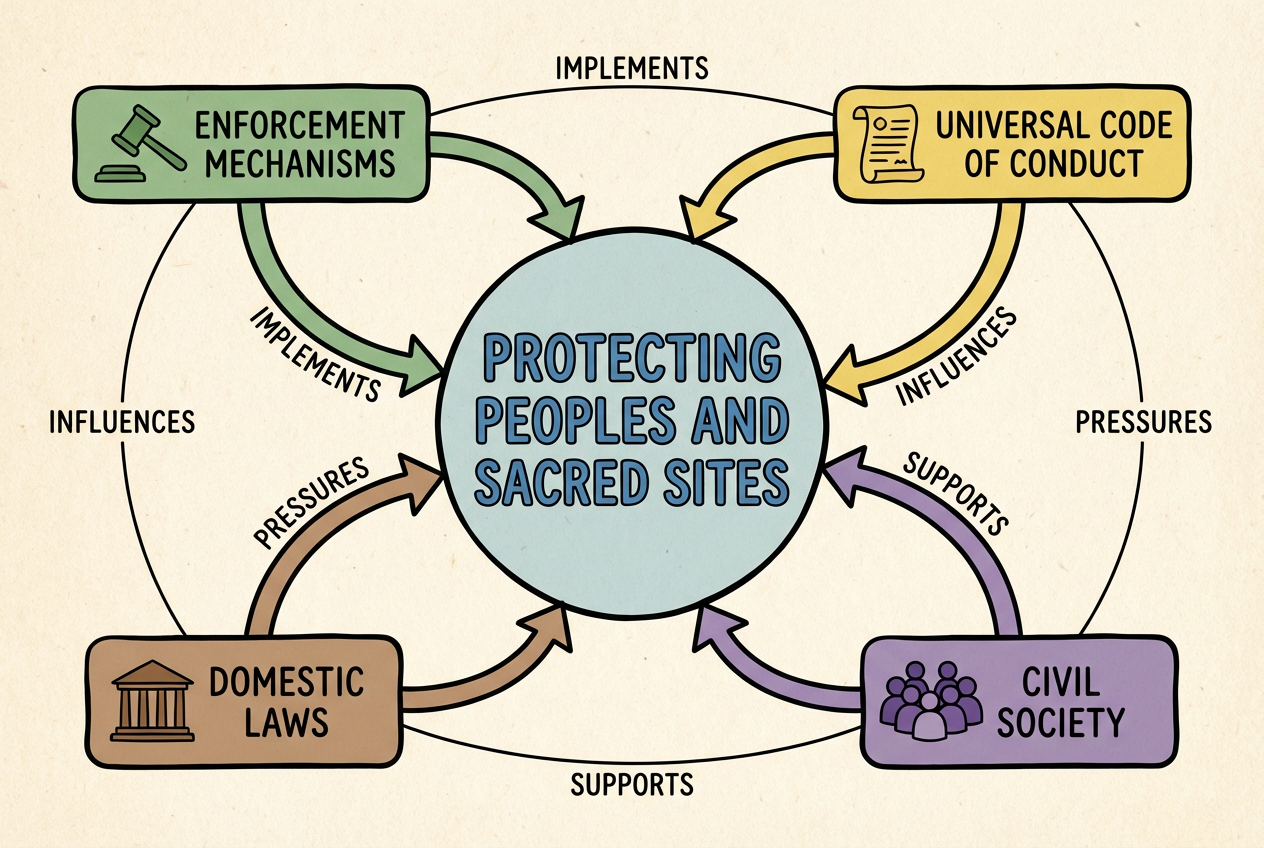
The failure of existing frameworks demands new approaches. Here are key proposals from legal experts and advocates:
Current Gap:
International courts issue orders but have no enforcement power.
Proposed Solutions:
- Create rapid-response international enforcement units
- Automatic sanctions for non-compliance with court orders
- Suspend UN membership for states in persistent violation
- International Criminal Police Organization (INTERPOL) authority for arrest warrants
Proposal:
Adopt and enforce a Universal Code of Conduct that provides specific, actionable protections for religious sites beyond existing conventions.
Key Elements:
- Clear definitions and inventory of protected sites
- Real-time monitoring systems with satellite verification
- Independent inspectors with guaranteed access
- Specific penalties for violations
- Protection extending before, during, and after conflicts
Examples:
U.S. Section 907 (Freedom Support Act): Prohibits assistance to Azerbaijan while it maintains blockades and aggression.
Humanitarian Aid Corridor Act: Denies assistance to any recipient restricting delivery of humanitarian aid.
Expansion Needed:
- More countries adopting similar legislation
- Automatic triggers based on documented violations
- Economic and diplomatic consequences that matter
2019 International Law Commission Proposal:
New comprehensive framework for prevention and punishment of crimes against humanity.
Key Improvements:
- Broader definition encompassing modern tactics
- Universal jurisdiction allowing any state to prosecute
- No statute of limitations for crimes against humanity
- Mandatory cooperation requirements between states
Critical Role:
When governments fail, civil society becomes the primary mechanism for accountability and change.
Actions:
- Real-time documentation and monitoring
- Creating global awareness and moral consensus
- Applying pressure on governments to act
- Supporting survivor communities
- Advocating for legal reforms
"The role of religious organizations and NGOs in monitoring and activating societal efforts can be the most effective."
Beyond Artsakh: A Global Problem
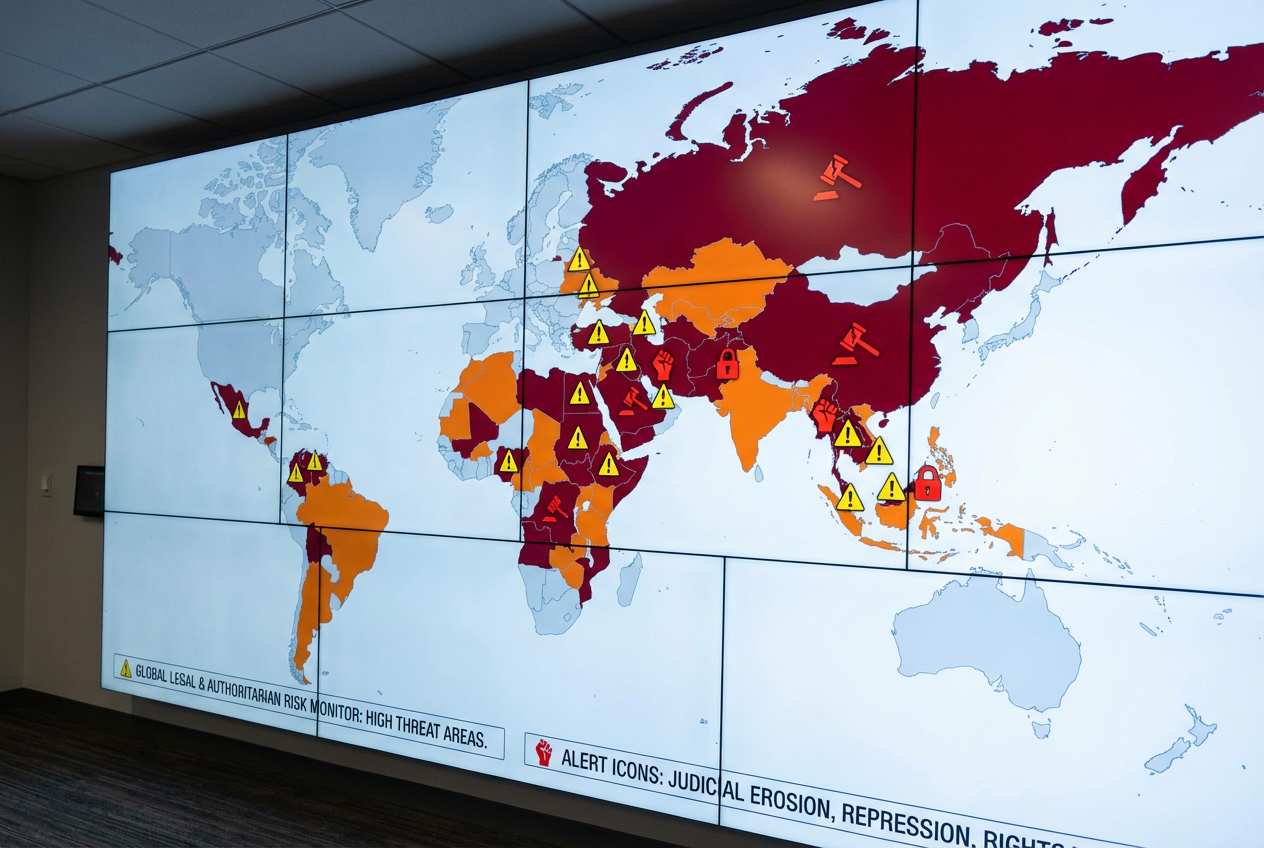
The Nagorno-Karabakh case is not unique. Similar patterns of legal framework failure are occurring worldwide:
Common Patterns
Experts, NGOs, and victims issue warnings. Documentation exists. Governments acknowledge concerns but take no preventive action.
Cases filed at international courts. Years pass in preliminary proceedings. Meanwhile, atrocities escalate and populations are displaced.
Courts issue rulings. Perpetrator states ignore them. No enforcement mechanism exists. International community expresses "concern."
By the time legal processes conclude, the situation is irreversible. Populations displaced, heritage destroyed, perpetrators entrenched.
Lack of consequences encourages other authoritarian regimes. The failure becomes precedent for future atrocities.
The Urgency of Now
The global trend toward authoritarianism makes these failures more frequent and more severe. Without fundamental changes to how international law is enforced, vulnerable populations remain at risk despite paper protections.
Knowledge Check 5
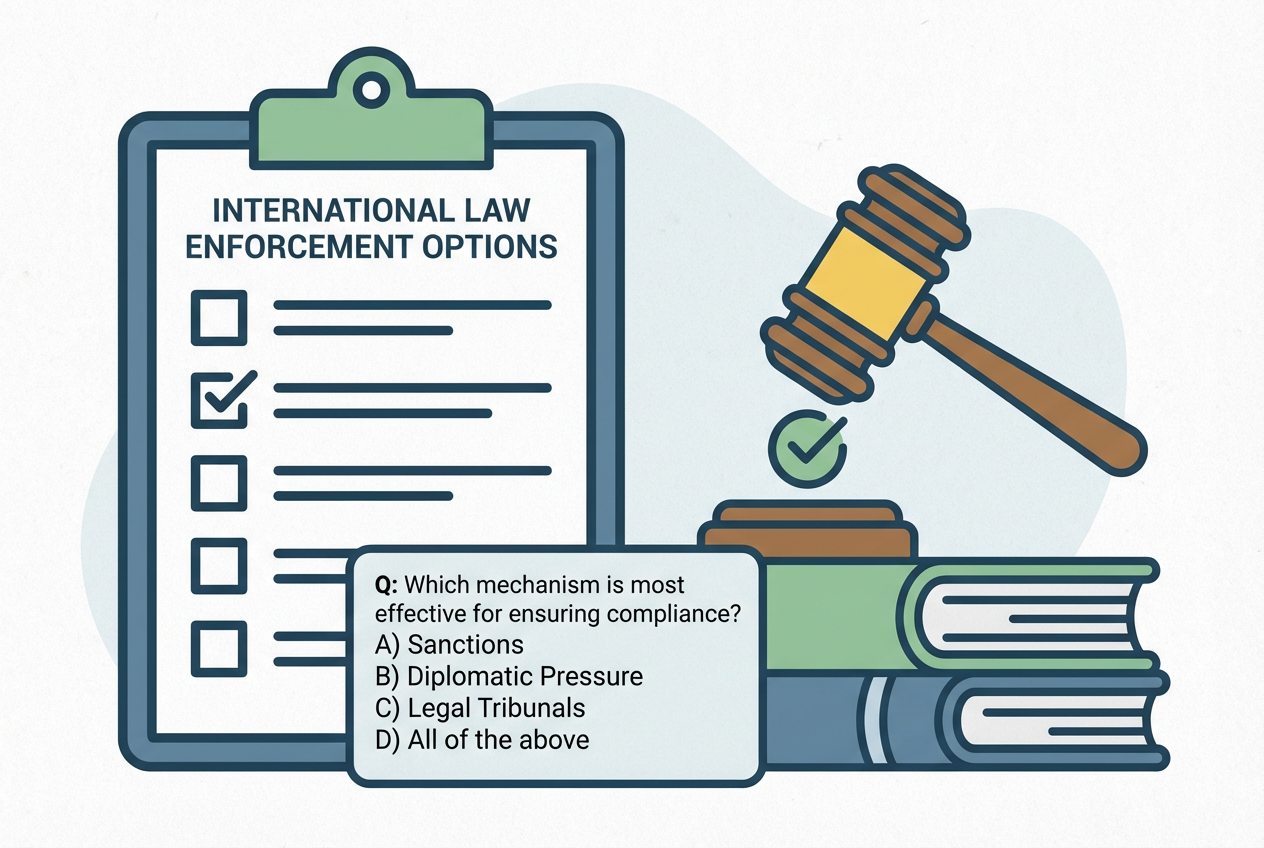
According to the lesson, which proposed solution addresses the enforcement gap in international law?
Feedback will appear here
What Can You Do?
Understanding the problem is the first step. Here are concrete actions individuals and organizations can take:
- Advocate for domestic legislation that enforces international obligations
- Support the adoption of the Draft Articles on Crimes Against Humanity
- Push for automatic enforcement mechanisms in new treaties
- Document and publicize cases where legal frameworks fail
- Connect human rights law to tangible consequences (sanctions, aid restrictions)
- Adopt and promote the Universal Code of Conduct on Holy Sites
- Create interfaith coalitions to protect threatened communities
- Document and publicize destruction of religious heritage
- Use moral authority to pressure governments
- Provide material and advocacy support to affected communities
- Monitor and document human rights violations in real-time
- Use technology (satellite imagery, social media analysis) for evidence
- Identify specific perpetrators and build cases for prosecution
- Create awareness campaigns that drive political action
- Support victims with legal, humanitarian, and advocacy resources
- Stay informed about ongoing situations where vulnerable populations are at risk
- Contact elected representatives to demand action on specific cases
- Support organizations working to protect threatened communities
- Share credible information through your networks
- Challenge denial and misinformation when you encounter it
- Remember that awareness and moral consensus precede political action
Key Takeaways
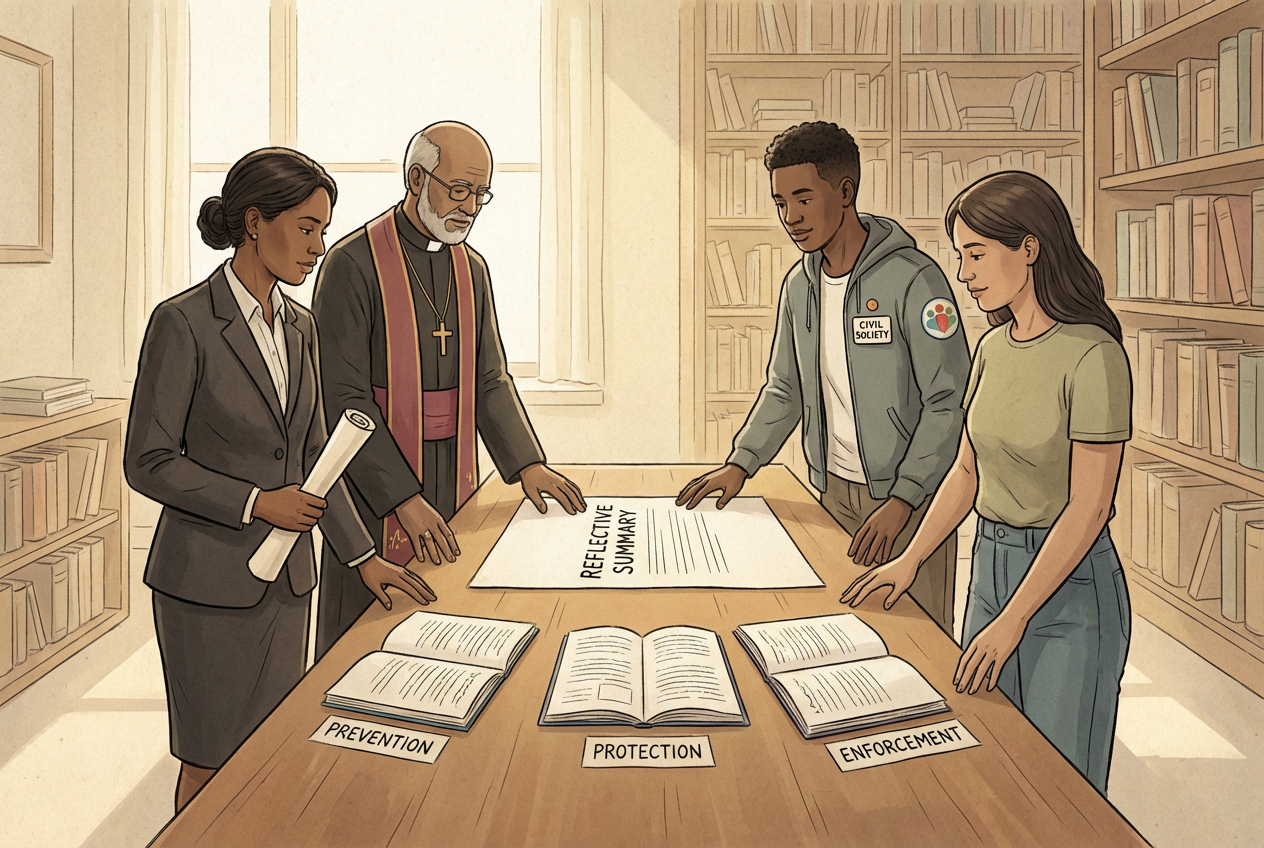
1. Legal Frameworks Exist But Are Insufficient
Comprehensive international law prohibits genocide, ethnic cleansing, and cultural destruction. Yet these acts continue because laws lack effective enforcement mechanisms.
2. The Gap Between Rights and Reality Is Widening
As authoritarianism rises globally, more states are willing to violate their international obligations with minimal consequences. Legal proceedings are too slow to prevent atrocities.
3. Manipulation Is Systematic
Perpetrator states sign treaties, make formal commitments to international courts, then systematically violate them using legal obfuscation and outright denial.
4. The Artsakh Case Demonstrates Complete System Failure
Despite existing treaties, ICJ jurisdiction, explicit court orders, international peacekeepers, and expert warnings, ethnic cleansing was completed with zero consequences for perpetrators.
5. New Approaches Are Essential
Proposals include: enforcement mechanisms with real teeth, universal codes of conduct, strengthened domestic legislation, expanded crimes against humanity framework, and empowered civil society monitoring.
6. Civil Society Is Critical
When governments and international bodies fail, religious organizations, NGOs, and informed citizens become the primary mechanisms for creating moral consensus and driving change.
The lesson from Artsakh and similar cases is clear: international legal frameworks must evolve beyond paper commitments to include rapid enforcement, automatic consequences, and empowered civil society oversight. Without these changes, vulnerable populations remain at risk despite the existence of legal protections.
Final Assessment

You've completed the lesson content. Now it's time to demonstrate your understanding through a comprehensive assessment.
Assessment Information
- Questions: 8 questions covering all major concepts
- Scoring: Each correct answer is worth equal points
- Passing Score: 80% or higher
- Certificate: Earn a certificate with 80%+ score
- Time: No time limit—take as long as you need
Ready to begin?
Assessment Question 1 of 8
What marked the "turning point" in transforming war practices into legal rules of warfare, according to the UN War Crimes Commission Report?
Assessment Question 2 of 8
What was Raphael Lemkin's stated goal regarding Turkey and the Genocide Convention?
Assessment Question 3 of 8
According to the lesson, which factor is NOT cited as a primary reason international legal frameworks fail?
Assessment Question 4 of 8
How many indigenous Armenians were forcibly displaced from Nagorno-Karabakh in September 2023?
Assessment Question 5 of 8
Under international humanitarian law's "distinction principle" for protecting religious sites, what must be presumed when there is doubt about whether a site is being used for military purposes?
Assessment Question 6 of 8
What did the Freedom House November 2024 report conclude about Azerbaijan's actions in Nagorno-Karabakh?
Assessment Question 7 of 8
Which proposed solution addresses the need for immediate application of protective standards for religious sites?
Assessment Question 8 of 8
According to the lesson, what role can civil society and religious organizations play when governmental frameworks fail?
Assessment Complete!